

| バージョン | 2.11.96-google |
|---|---|
| サイズ | 91 MB |
| 更新日 | 2026年10月1日 |
| カテゴリ | ツール |
| 必要環境 | Android 8.0 |
| MOD 情報 | Premium |
| Google Play | org.findmykids.child |
MOD 機能
- Premium.
Pingo is a companion app for Findmykids, designed to be installed on children's or teenagers' devices. This app connects the child's device to the parent's monitoring system, enabling GPS location tracking, movement history, and maintaining communication between family members. Pingo has currently surpassed 10 million downloads and is developed by LETEM LTD.

Overview of Pingo
The highlight of Pingo is that it does not function as a standard map tool. Users must install Findmykids on the parent's device, then install Pingo on the child's phone and enter the pairing code from the registration process. Once the devices are paired, parents can utilize the tracking features through the Findmykids system.
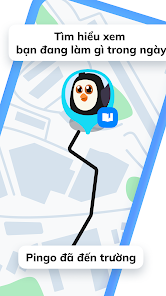
The app focuses on helping families track children's locations via GPS technology. The map displays the current location and daily movement history, assisting parents in monitoring their child's journey when necessary. Additionally, Pingo supports family communication, voice messaging, and other connectivity features.
Tracking children's location and activity
The GPS feature is the core function of Pingo. Once the device is connected, location information is transmitted to the Findmykids system for parents to view on the map. The daily movement history also helps identify the places the child has visited.

Pingo also supports notifications related to set locations, such as when a child arrives at school or returns home. Other features may help control screen time and send alerts when the child's device battery is low. Actual features may depend on the device, permissions granted, and the service plan in use.
Family connection and app installation
Beyond positioning, Pingo provides a family chat feature for parents and children to communicate directly. The app supports voice messages and chat content. Certain permissions such as microphone, camera, contacts, or accessibility services may be requested depending on the features used.
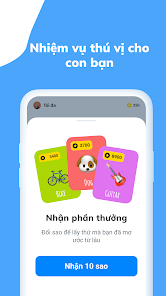
When installing, it is recommended to carefully check the requested permissions and only enable those necessary for desired functions. Since Pingo deals directly with location data and personal information, parents should have a clear discussion with their children about using the app, rather than treating it solely as a surveillance tool. Google Play states that the app may collect location, personal information, and other data; data is encrypted during transmission.
Notes on usage and installation guide
For Pingo to work stably, first install Findmykids on the parent's phone and Pingo on the child's device. Then, enter the correct pairing code to link the two devices. Grant the necessary location permissions and check Android battery saver settings if location updates are unstable.
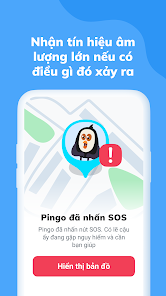
When using GPS, ensure an Internet connection and check the child's phone battery level. If you need to track a journey, it is better to view the location history instead of requesting continuous updates. For permissions like microphone or accessibility, only enable them when absolutely necessary.
Conclusion
Pingo is a companion app for children's devices within the Findmykids ecosystem, focusing on GPS positioning, family connectivity, and providing necessary information about a child's journey. When set up correctly and used transparently within the family, the app can be a convenient management and communication tool on Android phones.