

Chess Openings MOD APK 1.1.0 (Unlocked)
⬇ Télécharger l’APK (100 MB)| Version | 1.1.0 |
|---|---|
| Taille | 100 MB |
| Mis à jour | 1 oct. 2026 |
| Catégorie | Éducation |
| Requiert | Android 7.0 |
| Infos MOD | Unlocked |
| Google Play | net.chessatlas.app |
Fonctions du MOD
- Unlocked.
ChessAtlas is a chess companion app designed to help players build, practice, and memorize opening repertoires instead of just rote-learning move lists. The app integrates an interactive chessboard with a spaced repetition system, ensuring complex variations are brought back for regular review. Users can set up their own repertoires, use pre-made opening courses, or import real games to check where they deviated from their preparation.
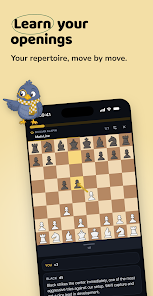
ChessAtlas Overview
The highlight of ChessAtlas is its deep focus on openings. Rather than functioning as an all-in-one chess playing platform, ChessAtlas guides users in building repertoires and turning each opening variation into study material with its own review schedule. Opening lines can be organized by name, color, or difficulty, making it easy for players to break down the learning process.
Build Repertoires and Learn Each Opening Variation
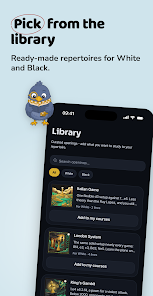
Users can create opening lines directly on the board by entering moves one by one. If data already exists, the app supports PGN import to convert it into a repertoire tree. Additionally, the ChessAtlas library features curated opening courses, allowing players to copy a course and tweak it to fit their own playing style.
This organization suits those looking to build a custom repertoire for White and Black pieces. Instead of trying to memorize too many variations at once, you can divide your repertoire into smaller groups and practice branch by branch. The reader mode also provides explanations behind the moves, helping learners grasp the strategic plans rather than just memorizing notation.
Spaced Repetition and Real Game Analysis
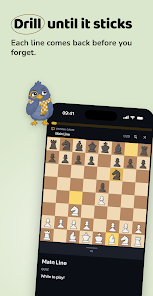
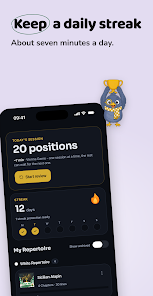
ChessAtlas utilizes FSRS to schedule study sessions. Each opening variation becomes a study item with its own review schedule. Uncertain lines appear more frequently, while well-memorized ones have their review intervals spaced out. Players practice directly on the board and receive instant feedback during the training process.
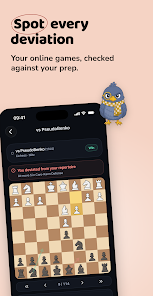
Another highlight of the app is the Lichess or Chess.com account linking feature to import real games. ChessAtlas can compare matches against the player's repertoire and identify moves that deviated from preparation. These positions can then be turned into training content, creating a clear logical loop: play games – identify weaknesses – add variations – retrain.
Tips and Usage Guide for ChessAtlas
To use ChessAtlas effectively, you should start with a repertoire suited to your skill level rather than loading too many variations at once. You can begin with openings that frequently appear in your games, then gradually add important branches once you have mastered that system.
During your training, try to think and find the moves yourself before looking at the solution. If a variation is frequently forgotten, instead of relearning the entire opening from scratch, focus purely on that specific position. Repeating a specific position multiple times will help you recognize it faster when a similar situation arises in an actual game.
Conclusion
ChessAtlas caters to a specific yet highly useful need for chess players: turning opening study into a structured training routine. Features like building your own repertoire, importing PGNs, training directly on the board, spaced repetition, and detecting deviations from preparation in real games help users bridge the gap between study and competition. If you want to reliably memorize your common opening variations rather than just passively reviewing them, ChessAtlas is a tool well worth adding to your chess training routine.